You're not failing at social media. You're just making the same seven mistakes that almost every small business in Macomb County makes. The good news: none of them are hard to fix once you know what to look for.
Right now there's a restaurant in Clinton Township with incredible food and a Facebook page that looks like it closed in 2024. A barbershop in Sterling Heights with a packed chair and an empty Instagram. An auto shop in Warren with five-star reviews and a Google profile from a different decade. Great businesses. Dead-looking online presence. Not because they don't care, but because nobody ever told them what was going wrong.
Here are the seven mistakes, why they hurt more than you think, and what to do about each one.
1 Why Does Inconsistent Posting Hurt Small Businesses?
Inconsistent social media posting damages small business credibility because potential customers interpret gaps in activity as a sign the business may be closed or unreliable. According to HubSpot, companies that publish 16 or more posts per month generate 3.5 times more traffic than those posting four or fewer. A regular posting cadence of three to four times per week signals active operations and builds algorithmic favor across all major platforms.
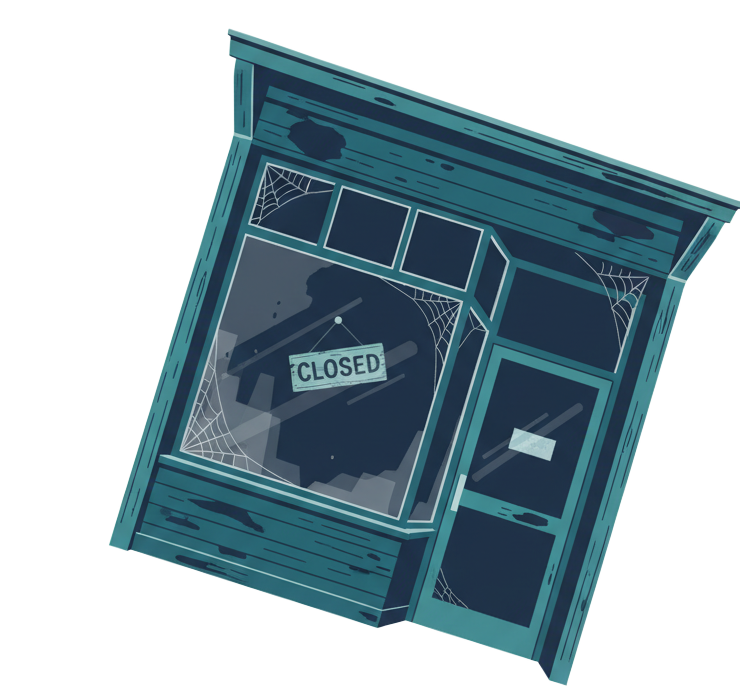
The "ghost town" effect is real, and it's costing you customers. A potential customer finds your Instagram page, sees the last post was from six weeks ago, and immediately questions whether you're still open. It doesn't matter that you've been slammed with work and just haven't had time to post. They don't know that. All they see is a page that looks abandoned.
We reviewed a barbershop on Van Dyke last month that had great reviews and a packed schedule. But their Facebook page had three posts in January, nothing in February, and one random photo in March. If you were a new resident in Shelby Township searching for a barber, you'd scroll right past them.
Consistency beats perfection every single time. Three posts a week, every week, is infinitely better than ten posts in one burst followed by two months of silence. HubSpot's marketing research found that businesses publishing consistent content generate 67% more leads per month than those that don't. Your followers don't need viral content. They need to see that the lights are on.
2 What Happens When You Ignore Your Google Business Profile?
Ignoring your Google Business Profile reduces local search visibility and erodes customer trust. Google prioritizes active GBP listings in the local map pack, and businesses that post weekly photos and updates receive 42% more direction requests and 35% more website clicks than inactive profiles, according to Google's own data. An outdated profile with wrong hours or no recent activity signals abandonment to both the algorithm and potential customers.
Your Google Business Profile is probably the first thing a new customer sees, and most small businesses haven't touched theirs in months. They set it up, added a few photos when they opened, and then forgot it existed. Meanwhile, every time someone Googles "auto body shop near me" or "best pizza in Clinton Township," that profile is the first thing that shows up.
An outdated GBP with old photos, wrong hours, and zero posts tells Google (and your future customers) that nobody is home. We wrote an entire guide to optimizing your Google Business Profile if you want the full breakdown, but the short version is this: post to it weekly, keep your hours accurate, and upload fresh photos every month. It takes ten minutes and it directly affects whether you show up in the map pack.
3 Why Do Stock Photos Hurt Small Business Social Media?
Stock photos reduce engagement on small business social media because audiences perceive them as inauthentic. Research from Stackla (now Nosto) found that 86% of consumers say authenticity matters when deciding which brands to support, and user-generated or original photography consistently outperforms stock imagery in click-through rates. For local businesses, real photos of actual staff, products, and locations build the trust that generic images cannot.
People can tell. They can always tell. That perfectly lit image of a smiling woman holding a coffee cup with a blurred cafe background? Your followers know you didn't take that. And when every photo on your page looks like it was pulled from a free stock library, it creates a disconnect. Your business is real, but your social media looks fake.
A slightly blurry photo of your actual shop on Hall Road, with your actual team standing behind the counter, will outperform a polished stock image every time. Why? Because it's real. People follow local businesses to see real people, real work, and real moments. Not catalog shots.
You don't need a photographer. You need a phone, decent lighting, and the willingness to take a photo of something real once or twice a week. Your workspace. A finished project. Your team eating lunch. That stuff builds trust in a way that no stock image can.
4 Should Small Businesses Respond to Every Online Review?
Yes. Small businesses should respond to every online review, both positive and negative. According to BrightLocal's 2025 Local Consumer Review Survey, 88% of consumers are more likely to use a business that responds to all reviews. Responding within 48 hours demonstrates active management, improves local SEO signals, and gives the business owner an opportunity to address concerns publicly, which builds trust with prospective customers reading the thread.
An unanswered review is a missed conversation in front of your entire future customer base. When someone leaves a review on Google and you don't respond, it's not just that one person who notices. Every potential customer who reads your reviews afterward sees it too. And what they see is a business that doesn't seem to care.
This goes double for negative reviews. An unhappy customer who gets a thoughtful, calm response from the owner? That actually builds trust with everyone reading. An unhappy customer who gets silence? That plants doubt. We covered this in depth in our post on how to get more Google reviews for your Michigan business, including exactly how to respond to the tough ones.
The fix is simple: set a weekly reminder to check your reviews and respond to every single one. It takes five minutes. A quick "Thanks, Mike, glad you liked the cut" on a positive review is enough. On a negative one, acknowledge it, stay professional, and offer to make it right. That's it.
Which of these mistakes are you making?
We'll audit your social media, your Google Business Profile, and your review presence. You'll get a clear, specific list of what's working and what's costing you customers. Free audit, 48-hour turnaround.
Get Your Free Audit →5 Why Shouldn't Small Businesses Copy Big Brand Social Media?
Small businesses should not copy big brand social media strategies because enterprise-level tactics rely on existing brand recognition that local businesses have not yet built. Large brands use abstract, aspirational messaging because their audience already knows the product. Small businesses need clarity, locality, and direct calls to action. Content that names a specific neighborhood, service, or offer consistently outperforms vague branding posts for businesses with under 10,000 followers.
Nike can post a black-and-white photo with a two-word caption because they're Nike. You're not Nike. You're a local business on Gratiot Avenue competing for attention against every other business in your category. What works for a brand with $50 billion in annual revenue and universal name recognition does not work for a small business trying to get noticed in Macomb County.
Big brands can be vague and artsy because everyone already knows who they are. You need to be clear and direct. What do you do? Where are you? Why should someone come in this week instead of next month? That's what your social media should answer.
Stop studying Wendy's Twitter replies and start studying the local businesses in your area that have great engagement. The pizza shop that posts their daily specials with a quick phone video. The barber who shares before-and-after photos of every fresh cut. The auto detail shop that posts a 15-second clip of every finished car. Simple, consistent, real. That's the playbook that works at your scale.
6 Should You Post the Same Content on Every Social Media Platform?
No. Posting identical content across Facebook, Instagram, and TikTok reduces performance on all three because each platform uses different algorithms, formats, and audience expectations. Facebook favors community discussion and longer text. Instagram prioritizes visual quality and Reels. TikTok rewards raw, personality-driven short video. Small businesses see better results by choosing one or two platforms where their customers are most active and tailoring content to each platform's strengths.
Copy-pasting the same post across Facebook, Instagram, and TikTok is like wearing a swimsuit to a job interview. Technically, you showed up. But the context is all wrong.
Each platform has a different audience and a different set of expectations. Facebook is where your existing customers hang out. It rewards longer text posts, community interaction, and local event sharing. Instagram is visual first. It rewards strong photos, reels, and stories. TikTok is raw, fast, and personality-driven. It rewards behind-the-scenes content and quick hooks.
You don't need to be on all three. Pick the one or two where your customers actually spend time and do those well. If you want help figuring out which platforms make the most sense for your type of business, we broke it all down in our Facebook vs. Instagram vs. TikTok comparison for Metro Detroit businesses.
One or two platforms done consistently will always outperform four platforms done poorly.
7 Why Do Social Media Posts Need a Call to Action?
Social media posts without a call to action generate significantly less engagement and zero direct conversions. A call to action tells the viewer what to do next, whether that is booking an appointment, visiting the website, or calling the business. Posts that include a clear CTA see up to 285% higher click-through rates than those without one, according to protocol80 research on social media engagement. Even a simple "DM us" or "link in bio" converts passive scrollers into active leads.
If you never ask, you never get. This one is painfully common. A small business posts a great photo, writes a decent caption, and then just... ends it. No "Book your appointment today." No "Link in bio." No "Call us at..." Nothing. The post exists, it gets a few likes, and nobody does anything about it.
Every post should make it easy for someone to take the next step. Not every post needs a hard sell. But there should always be a gentle nudge somewhere. "Stop by this week." "DM us for pricing." "Tap the link to schedule." "Tag someone who needs this."
Think of it this way: your post is a conversation starter. The call to action is how you keep the conversation going instead of letting it die. Without it, you're just talking into a room and then walking out before anyone can respond.
How Do You Fix Common Small Business Social Media Mistakes?
To fix common small business social media mistakes, start by committing to a consistent posting schedule of three posts per week on one primary platform. Update your Google Business Profile weekly with a fresh photo and a post. Replace stock images with real photos of your business, staff, and work. Respond to every online review within 48 hours. End every post with a clear call to action such as "book now" or "call us today."

If you're reading this list and counting three or four that apply to you, don't beat yourself up. You're running a business. You're pulling espresso, cutting hair, fixing fenders, managing staff. The social media just never gets done because it's never the most urgent thing on your plate.
Here's the realistic fix, whether you do it yourself or bring in help:
- Pick one platform and commit to 3 posts a week. Put it on your calendar like a meeting. Tuesday, Thursday, Saturday. Done.
- Spend 10 minutes every Monday on your Google Business Profile. One post, one photo upload, respond to any new reviews. That's it.
- Take 3 real photos a week. Your shop, your work, your team. Phone photos are fine. Authenticity beats polish.
- Respond to every review within 48 hours. Set a reminder. Two sentences is enough.
- End every post with a next step. "Book now." "Call us." "Link in bio." Make it easy.
- Stop copying big brands. Be specific. Be local. Mention your street, your city, your neighborhood.
If that sounds manageable, great. Run with it. If it sounds like another thing on a list you'll never get to, that's okay too. That's exactly the situation where bringing in a local agency starts making financial sense. Curious what that costs? Here's our breakdown of social media management pricing in Michigan. Not because you can't do it, but because your time is worth more spent on the parts of your business that only you can handle.
Not sure if your business even needs social media? We break that down honestly. If the answer is yes and you're stuck on content, here are 30 post ideas that actually work for small businesses. Running a barbershop or salon? We wrote a dedicated social media guide for shops in Michigan. And if your website needs attention too, here's what a small business website costs in Michigan.
We work with small businesses across Macomb County. We've been in the shops on Van Dyke, eaten at the restaurants on Hall Road, and know which parking lots flood every spring. We write content that sounds like you, not like an agency. If you want to see what that looks like for your business, grab a free audit and we'll show you.